


Attēls:Emblem of India.svg
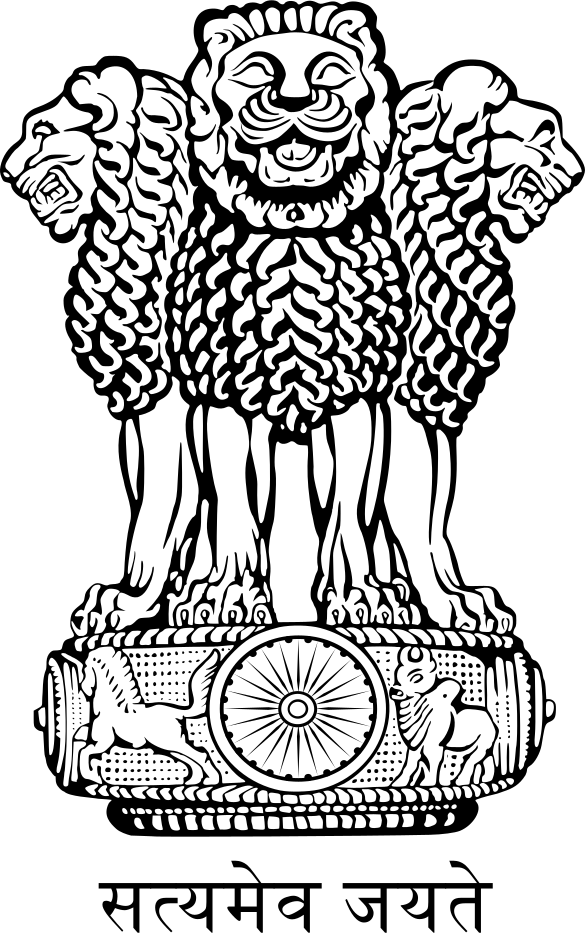
Sākotnējais fails (SVG fails, definētais izmērs 549 × 875 pikseļi, faila izmērs: 318 KB)
 | Šis fails ir no Vikikrātuves. Tā apraksts no attēla lapas Vikikrātuvē ir parādīts zemāk. Vikikrātuve ir brīvi licencēta failu krātuve. Tu vari tai palīdzēt. |

Kopsavilkums
| Apraksts |
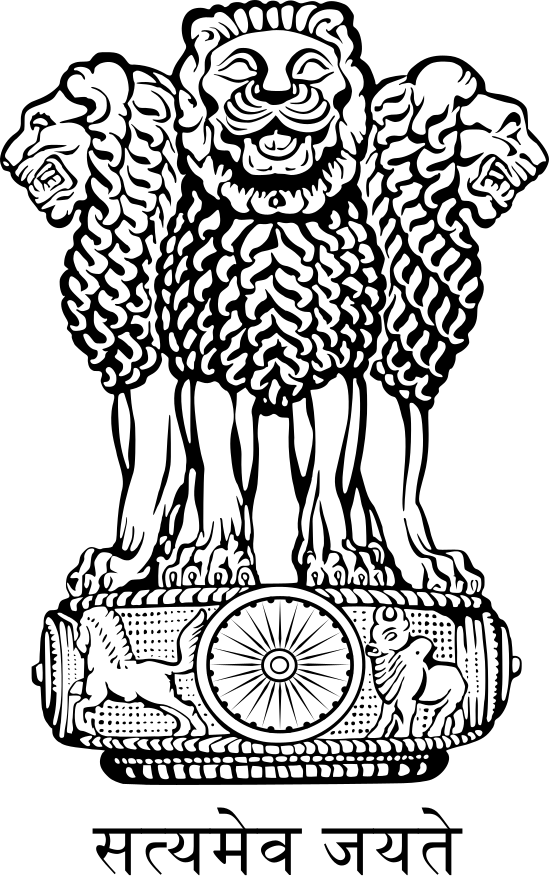
English: The National Emblem of India is derived from the time of the Emperor Ashoka. The emblem is a replica of the Lion of Sarnath, near Varanasi in Uttar Pradesh. The Lion Capital was erected in the third century BC by Emperor Ashoka to mark the spot where Buddha first proclaimed his gospel of peace and emancipation to the four quarters of the universe. The national emblem is thus symbolic of contemporary India’s reaffirmation of its ancient commitment to world peace and goodwill. The four lions(one hidden from view ) – symbolising power, courage and confidence- rest on a circular abacus. The abacus is girded by four smaller animals—Guardians of the four directions: The Lion of the North, The Horse of the West, The Bull of the South and The Elephant of the East. The abacus rests on a lotus in full bloom, exemplifying the fountainhead of life and creative inspiration.
The motto 'Satyameva Jayate' inscribed below the emblem in Devanagari script means 'truth alone triumphs'. |
| Datums | |
| Avots | Extracted from PDF version of 'ACT NO. 50 OF 2005' (direct PDF URL THE STATE EMBLEM OF INDIA (PROHIBITION OF IMPROPER USE) ACT, 2005 ACT NO. 50 OF 2005 (2005-12-20). Archived from the original on 2022-07-12.) |
| Autors | Government of India |
| Citas versijas |
|
| SVG veidošana |
.svg)
.svg)
.svg)


.svg)
Licence

|
This work is in the public domain in India because its term of copyright has expired.
The Indian Copyright Act applies in India to works first published in India. According to the Indian Copyright Act, 1957, as amended up to Act No. 27 of 2012 (Chapter V, Section 25):
|
 |





|
This image shows a flag, a coat of arms, a seal or some other official insignia. The use of such symbols is restricted in many countries. These restrictions are independent of the copyright status. |
Faila hronoloģija
Uzklikšķini uz datums/laiks kolonnā esošās saites, lai apskatītos, kā šis fails izskatījās tad.


| Datums/Laiks | Attēls | Izmēri | Dalībnieks | Komentārs | |
|---|---|---|---|---|---|
| tagadējais | 2023. gada 24. marts, plkst. 16.50 | | 549 × 875 (318 KB) | Fry1989 | Reverted to version as of 09:48, 24 March 2023 (UTC) |
| 2023. gada 24. marts, plkst. 15.09 |  | 1 004 × 1 600 (88 KB) | भोजपुरी | Reverted to version as of 08:22, 24 March 2023 (UTC) | |
| 2023. gada 24. marts, plkst. 12.48 |  | 549 × 875 (318 KB) | Kashmiri | Reverted to version as of 18:10, 4 February 2023 (UTC) | |
| 2023. gada 24. marts, plkst. 11.22 |  | 1 004 × 1 600 (88 KB) | लोहरान | ||
| 2023. gada 4. februāris, plkst. 21.10 |  | 549 × 875 (318 KB) | ChiK | See page no 5 [https://legislative.gov.in/sites/default/files/A2005-50.pdf here] | |
| 2023. gada 4. februāris, plkst. 10.13 |  | 370 × 600 (169 KB) | VNC200 | Reverted to version as of 11:42, 9 October 2021 (UTC) | |
| 2023. gada 31. janvāris, plkst. 05.22 |  | 549 × 875 (318 KB) | ChiK | Vandelism -Reverted to version as of 17:50, 25 December 2022 (UTC) | |
| 2023. gada 28. janvāris, plkst. 12.46 |  | 370 × 600 (169 KB) | Shebejeyebeb | Reverted to version as of 18:54, 22 December 2022 (UTC) | |
| 2022. gada 25. decembris, plkst. 20.50 |  | 549 × 875 (318 KB) | ChiK | Revert vandalism back | |
| 2022. gada 22. decembris, plkst. 21.54 |  | 370 × 600 (169 KB) | Swapnil1101 | Revert - Vandelism |
Faila lietojums
Šo failu izmanto šajā 51 lapā:
- Andamanu un Nikobaru Salas
- Arunāčala Pradēša
- Asama
- Bihāra
- Britu Indija
- Damāna un Diu
- Dādra un Nagarhaveli
- Džammu un Kašmīra
- Džammu un Kašmīra (štats)
- Džhārkhanda
- Goa
- Gudžarāta
- Guptu impērija
- Harjāna
- Himāčala Pradēša
- Indas ielejas civilizācija
- Indija
- Indijas administratīvais iedalījums
- Indijas emblēma
- Indijas vēsture
- Indijas štati un teritorijas
- Karnātaka
- Kerala
- Ladākha
- Lakšadvīpa
- Madhja Pradēša
- Mahārāštra
- Manipura
- Maurju impērija
- Meghālaja
- Mizorāma
- Nacionālo devīžu uzskaitījums
- Nāgālenda
- Odiša
- Pendžāba (Indija)
- Pudučerri
- Rietumbengāle
- Rādžastāna
- Sikima
- Tamilnāda
- Telangāna
- Tripura
- Utarakhanda
- Utarpradēša
- Valstu ģerboņu galerija
- Āndhra Pradēša
- Āzijas valstu un atkarīgo teritoriju uzskaitījums
- Čandīgarha
- Čhatīsgarha
- Veidne:Indijas vēsture
- Veidne:Indijas štati
Globālais faila lietojums
Šīs Vikipēdijas izmanto šo failu:
- Izmantojums ab.wikipedia.org
- Izmantojums ace.wikipedia.org
- Izmantojums af.wikipedia.org
- Izmantojums als.wikipedia.org
- Izmantojums am.wikipedia.org
- Izmantojums ang.wikipedia.org
- Izmantojums anp.wikipedia.org
- Izmantojums an.wikipedia.org
- Izmantojums arc.wikipedia.org
- Izmantojums ar.wikipedia.org
- الهند
- نهر الغانج
- جنوب آسيا
- جواهر لال نهرو
- أنديرا غاندي
- مانموهان سينغ
- ناريندرا مودي
- روبية هندية
- شعارات الدول الآسيوية
- علم الهند
- راجيف غاندي
- الدين في الرموز الوطنية
- ناشر ملك
- شعار الهند
- قائمة رؤوس دولة الهند
- قائمة رؤساء وزراء الهند
- جانا غانا مانا
- القوات المسلحة الهندية
- سياسة الهند
- بوابة:الهند
- بوابة:الهند/مقدمة
- أتال بيهاري فاجبايي
- الأحزاب السياسية في الهند
- لال بهادور شاستري
- طاووس هندي
- اليوم الجمهوري (الهند)
- الحرب الباكستانية الهندية 1971
- قائمة شعارات الدول
- نيلم جوزي
- قالب:رؤساء وزراء الهند
Skatīt šī faila pilno globālo izmantojumu.

